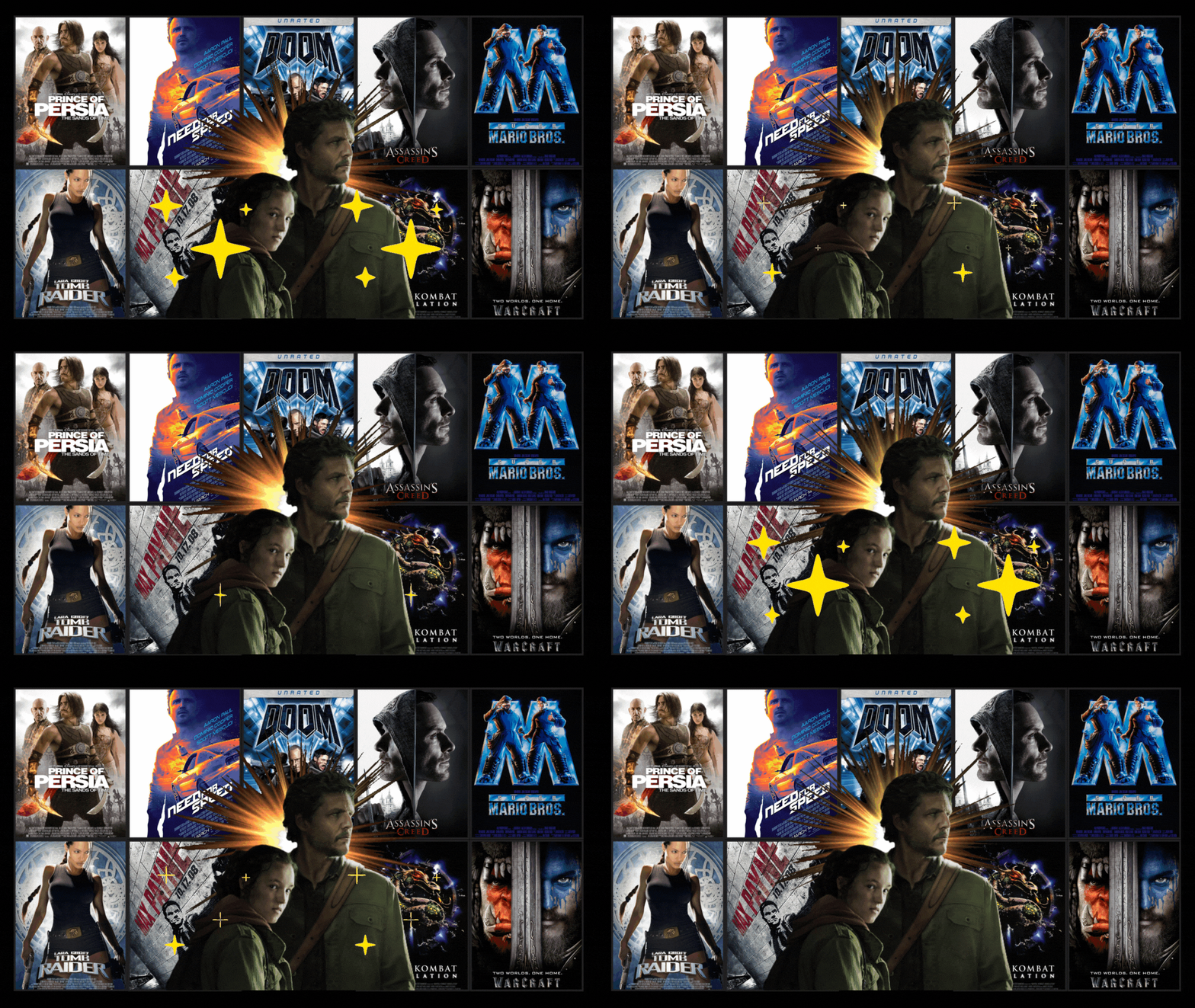
Film and TV Series Adapted Games in 2026: Has the Curse of Failure Finally Ended?

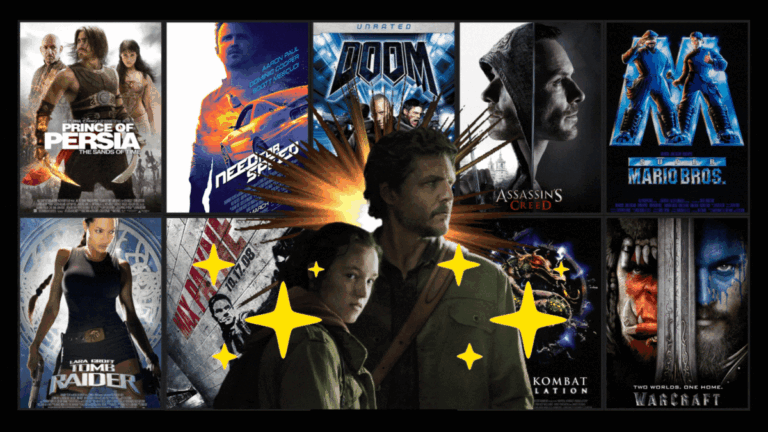
For decades, video games adapted from films and TV series have carried a bad reputation. Rushed development cycles, shallow gameplay, and overreliance on popular licenses have caused many of these games to be labeled as cash grabs rather than meaningful experiences. However, as we enter 2026, the landscape looks very different. With better technology, stronger storytelling tools, and a more mature gaming audience, a critical question emerges: has the long-standing curse of failed film and series adaptations finally been broken?
The answer leans increasingly toward optimism.
Why Adapted Games Failed in the Past

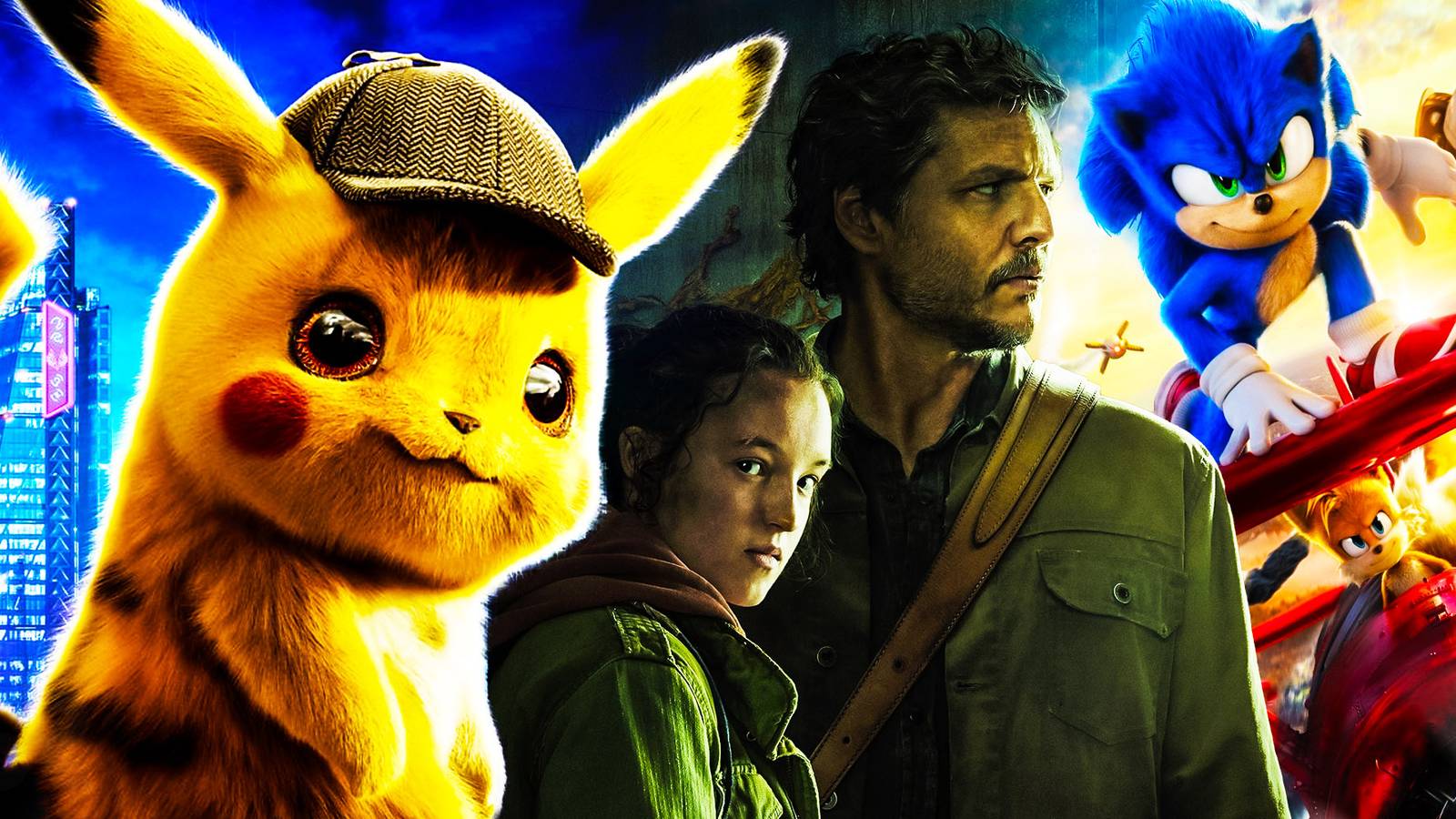
Historically, movie and TV adaptations suffered from one major issue: timing. Games were often forced to launch alongside film releases, leaving developers with limited time to create polished experiences. Gameplay depth was sacrificed to meet marketing deadlines, and storytelling took a backseat to brand recognition.
Additionally, many studios treated licensed games as secondary products. Budgets were smaller, creative freedom was restricted, and innovation was discouraged. As a result, players came to expect mediocrity whenever a game carried the name of a popular film or series.
What Changed by 2026?

By 2026, the entertainment industry has evolved into a more interconnected ecosystem. Film studios, streaming platforms, and game developers now collaborate earlier and more closely. Instead of being afterthoughts, games are increasingly planned as core components of a franchise’s universe.
Several key changes have driven this transformation:
• Longer development cycles not tied to movie release dates
• Bigger budgets comparable to AAA original IPs
• Experienced studios handling licensed properties
• Greater respect for source material and fan expectations
These shifts have allowed adapted games to grow beyond their troubled past.
Games as Expansions, Not Retellings
One of the most important trends in 2026 is that adaptation games no longer simply retell film or series stories. Instead, they expand the universe. Players experience side stories, original characters, or events that occur between seasons or movies.
This approach benefits both storytelling and gameplay. Developers gain creative freedom, while fans receive fresh content that enhances the original narrative rather than replacing it. Games feel meaningful—even for those who already know the plot.
Improved Storytelling and Cinematic Presentation
Modern game engines in 2026 enable cinematic storytelling that rivals film and television. Motion capture, advanced facial animation, and dynamic lighting allow adapted games to capture the emotional tone of their source material.
More importantly, writers from the original films or series are often involved in game development. This ensures consistency in character behavior, dialogue, and world-building. As a result, players feel like they are inhabiting the same universe—not a cheap imitation.
Gameplay Finally Comes First
Another sign that the curse is fading is a renewed focus on gameplay quality. In 2026, players no longer tolerate weak mechanics just because a game carries a famous name. Developers understand this and invest heavily in core systems such as combat, exploration, progression, and player choice.
Adapted games now choose genres that fit the source material instead of forcing inappropriate mechanics. Action franchises become skill-based combat games, narrative-heavy series turn into story-driven adventures, and sci-fi universes embrace RPG or open-world designs.
Streaming Culture and Long-Term Support
The rise of streaming platforms has also played a major role. Many TV series now run for multiple seasons, providing a long-term roadmap for game developers. Instead of one-off releases, adapted games in 2026 often receive continuous updates, expansions, and live events that align with new episodes or seasons.
This live-service approach, when done responsibly, keeps the game relevant while respecting the narrative. Players stay engaged, and franchises maintain momentum across multiple media platforms.
Are There Still Risks?
Despite the progress, not every adaptation succeeds. Poor creative direction, misaligned gameplay design, or over-monetization can still harm a project. Some studios continue to rely too heavily on brand recognition rather than quality.
However, the difference in 2026 is accountability. Players are quicker to criticize, and social media ensures that failures are visible. This pressure pushes publishers to take adapted games more seriously than ever before.
The Future of Film and Series Adapted Games
Looking ahead, adapted games are no longer seen as risky side projects. They are strategic investments that can deepen fan engagement and extend the lifespan of a franchise. When done right, these games offer something unique that films and series cannot: active participation.
Players don’t just watch their favorite worlds—they live in them.
Conclusion: Is the Curse Truly Broken?
So, has the curse of failed film and TV series adaptations ended in 2026?
Not entirely—but it’s closer than ever.
While failures still exist, the industry has learned from decades of mistakes. Better collaboration, stronger storytelling, improved technology, and a gameplay-first mindset have transformed how adaptations are made. In 2026, a game adapted from a film or series is no longer automatically dismissed—it’s cautiously anticipated.
The curse hasn’t vanished completely, but for the first time, it no longer defines the genre.
About the Author